Beginner Guide to BPC-157
What Is BPC-157 and Where Does It Come From?
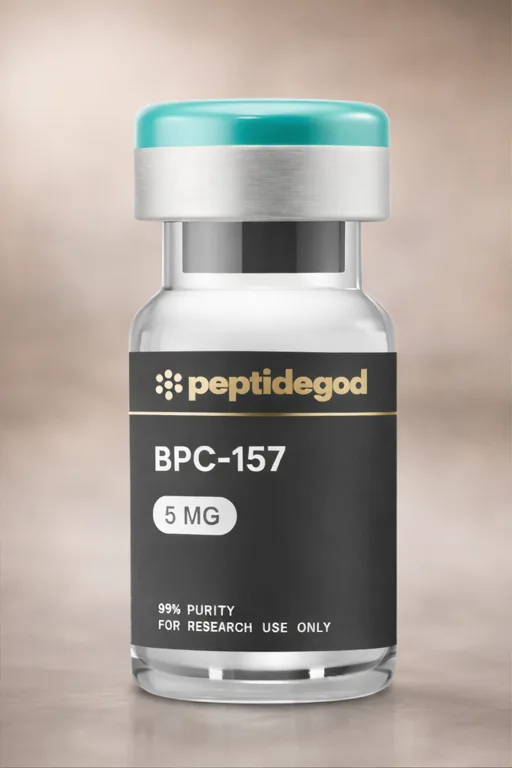
If you have recently come across the term in wellness or sports research circles, you may be wondering what is bpc 157 exactly. BPC-157 stands for Body Protection Compound-157. It is a synthetic peptide made up of 15 amino acids, derived from a naturally occurring protein found in human gastric juice. Researchers first isolated the parent sequence from the stomach lining, where it appears to play a role in mucosal protection and healing. The laboratory version, BPC-157, is a stabilized fragment designed for controlled study outside the body.
Unlike many peptides that break down rapidly in biological environments, BPC-157 demonstrates notable stability in both gastric acid and plasma, which has made it a subject of sustained interest in preclinical research. Most published studies have been conducted in rodent models, examining how the compound interacts with various tissue types, growth factor pathways, and the nervous system.
Mechanisms Researchers Are Studying
A significant portion of the scientific interest in BPC-157 centers on its apparent ability to modulate several biological pathways at once. Researchers have observed interactions with the nitric oxide system, which influences blood vessel formation and blood flow to damaged tissue. Angiogenesis, the process by which new capillaries grow into injured areas, appears to be upregulated in animal models treated with BPC-157, potentially accelerating the delivery of oxygen and nutrients to repair sites.
The compound also seems to interact with growth hormone receptor signaling without directly raising circulating growth hormone levels. Additionally, early studies point to activity involving the dopaminergic and serotonergic systems in the brain, which has prompted investigation into neurological and mood-related applications. Tendon-to-bone healing, ligament repair, muscle tissue recovery, and gut wall integrity are among the most frequently examined areas in the preclinical literature.
Forms and Administration Routes in Research Settings
Research protocols use BPC-157 in several different forms, each suited to studying particular tissue targets. Understanding these distinctions is useful context when evaluating published studies.
- Injectable solution: Administered subcutaneously or intramuscularly, often used in studies targeting musculoskeletal tissue, systemic effects, and neurological outcomes.
- Oral gavage: Delivered directly to the stomach in rodent studies to examine gut healing, inflammatory bowel models, and systemic absorption from the GI tract.
- Topical application: Applied directly to wound sites in some dermal and corneal repair studies.
- Stable salt form (BPC-157 arginate): A variant formulated for improved oral stability, increasingly referenced in newer research as a potentially more bioavailable oral form.
The route chosen in a given study significantly affects the observed outcomes, which is one reason researchers emphasize reading methodology carefully before drawing conclusions from any single paper.
What the Current Research Landscape Looks Like
The majority of BPC-157 research to date has been conducted in rats and mice, with studies published across gastroenterology, orthopedics, neuroscience, and sports medicine journals. Results in animal models have generally been described as promising, particularly in the areas of Achilles tendon repair, inflammatory bowel disease models, and traumatic brain injury. Some researchers have noted that the peptide appears to work systemically even when administered locally, suggesting a signaling effect beyond the immediate injection or application site.
Human clinical trials remain limited. As of the current research horizon, BPC-157 has not completed the full clinical trial pathway required for pharmaceutical approval in any major jurisdiction. This is a critical distinction for anyone evaluating what is bpc 157 from a regulatory standpoint. It is classified as a research compound, meaning its use is confined to laboratory and investigational contexts, not approved therapeutic application in humans.
Key Considerations Before Reviewing BPC-157 Research
For anyone entering this area of study, a few foundational points help frame the literature accurately. First, animal model results do not automatically translate to human outcomes. Peptide metabolism, receptor distribution, and tissue architecture differ enough between species that preclinical success has frequently not replicated in human trials across many therapeutic areas.
Second, purity and synthesis quality vary considerably between research-grade suppliers, which means studies using different sources may not be directly comparable. Third, dosing protocols in published literature span a wide range, and no consensus therapeutic window has been established for human application.
Understanding what is bpc 157 from a research perspective means holding both the genuine scientific curiosity it warrants and a clear-eyed recognition of what has and has not yet been demonstrated in controlled human studies. The peptide remains one of the more actively studied compounds in the preclinical space, and the coming years of research should clarify which of the observed animal-model effects carry meaningful translational potential.
This article is for informational and research purposes only and does not constitute medical advice. BPC-157 is not approved for human therapeutic use by any major regulatory body.
 30 capsules.webp)
 60 capsules.webp)