Is BPC-157 a Peptide?
Understanding What BPC-157 Is
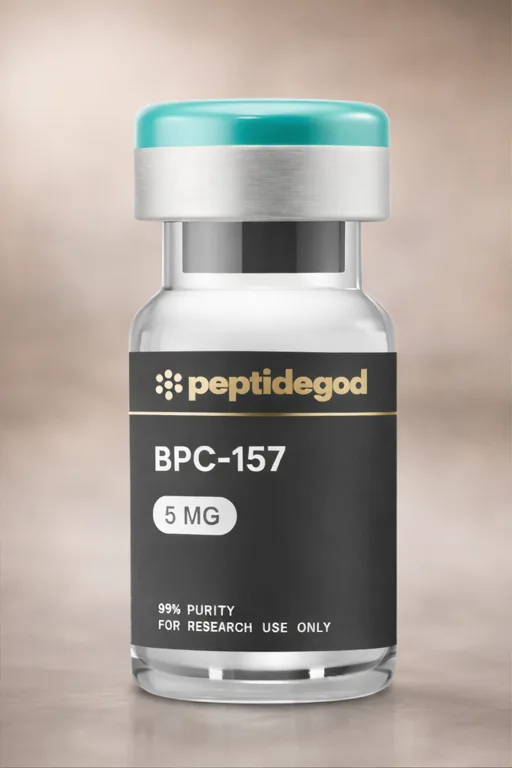
BPC-157 is indeed a peptide — specifically, a synthetic pentadecapeptide composed of 15 amino acids. Its full designation is Body Protection Compound-157, a name that reflects its origins in research into the cytoprotective properties of gastric juice. Scientists isolated and identified the parent protein in gastric secretions, then synthesized a stable fragment — the 15-amino-acid sequence now known as BPC-157 — for laboratory investigation. For anyone asking what is bpc 157 at a basic biochemical level, the straightforward answer is that it is a short-chain peptide derived from a naturally occurring protein found in the human stomach.
Peptides are chains of amino acids linked together by peptide bonds. They differ from proteins primarily by length: compounds with fewer than 50 amino acids are generally classified as peptides, while longer chains are proteins. At 15 amino acids, BPC-157 sits firmly in the peptide category. Its molecular formula is C62H98N16O22 and it has a molecular weight of approximately 1419.5 daltons, consistent with small research peptides studied across gastroenterology, orthopedics, and neuroscience.
The Amino Acid Sequence and Structure
The precise sequence of BPC-157 is: Gly-Glu-Pro-Pro-Pro-Gly-Lys-Pro-Ala-Asp-Asp-Ala-Gly-Leu-Val. This arrangement is not random — researchers selected and stabilized this particular sequence because it resists degradation more effectively than the broader gastric protein from which it was derived. Most peptides break down rapidly in the gastrointestinal tract or bloodstream, but BPC-157 demonstrates notable stability in human gastric juice, which has made it a practical candidate for oral administration studies in animal models.
The proline-rich middle segment of the sequence (Pro-Pro-Pro) contributes significantly to this structural resilience. Proline is a cyclic amino acid that introduces rigidity into peptide chains and slows enzymatic cleavage. This chemical characteristic is one reason BPC-157 has attracted sustained interest from researchers studying compounds that must survive the biological environment long enough to exert measurable effects.
How BPC-157 Differs From Other Research Peptides
When researchers and enthusiasts explore what is bpc 157 in comparison to other peptides, several distinguishing features emerge. Unlike growth hormone secretagogues such as Ipamorelin or CJC-1295, BPC-157 does not act on the pituitary-hypothalamic axis or stimulate systemic growth hormone release. Its proposed mechanisms are more localized, involving nitric oxide synthesis, angiogenesis promotion, and modulation of growth factor expression at injury sites.
- BPC-157 has been studied in tendon, ligament, muscle, and bone repair models
- It appears to interact with the VEGF (vascular endothelial growth factor) pathway to support new blood vessel formation
- Research suggests influence on dopamine and serotonin systems in the central nervous system
- Animal studies have examined its effects on gut motility and intestinal anastomosis healing
- It does not appear to produce receptor desensitization at the doses used in research settings
This profile makes BPC-157 distinct from peptides that operate through endocrine signaling. It is more accurately described as a locally acting cytoprotective peptide rather than a systemic hormonal agent, though research into its full mechanism of action remains ongoing.
Research Applications and Current Status
The bulk of published BPC-157 research consists of in vitro cell studies and in vivo rodent models. Preclinical data has examined its potential in healing Achilles tendon transections, accelerating bone fracture repair, reducing inflammation in colitis models, and protecting neurons following traumatic injury. These studies have generated interest in the peptide research community, though no large-scale human clinical trials have been completed to date.
BPC-157 is classified as a research compound. It is not approved by the FDA or EMA as a pharmaceutical drug, and it is not intended for human therapeutic use outside of formally authorized clinical research. Any discussion of its properties, including this article, is strictly informational and does not constitute medical advice. Researchers working with BPC-157 do so within controlled laboratory environments under appropriate institutional oversight.
Why the Peptide Classification Matters
Understanding what is bpc 157 at the molecular level has practical implications for how researchers think about its delivery, stability, and study design. Because it is a peptide, BPC-157 faces the same biological barriers as other peptide compounds: potential hydrolysis by peptidases, limited membrane permeability, and variable bioavailability depending on route of administration. Research protocols have explored subcutaneous injection, intramuscular injection, and oral gavage in animal models, each producing data relevant to the compound's behavior under different conditions.
The fact that BPC-157 is a peptide also informs how it is synthesized and stored. It is produced through solid-phase peptide synthesis (SPPS), the standard method for manufacturing short-chain peptides for research. Proper storage typically requires lyophilization (freeze-drying) and reconstitution with bacteriostatic water before use, with temperature-controlled conditions to prevent degradation. These handling requirements are standard across the peptide research field and underscore the importance of sourcing compounds from reputable suppliers who provide third-party purity verification.
 30 capsules.webp)
 60 capsules.webp)